Listening Across Continents
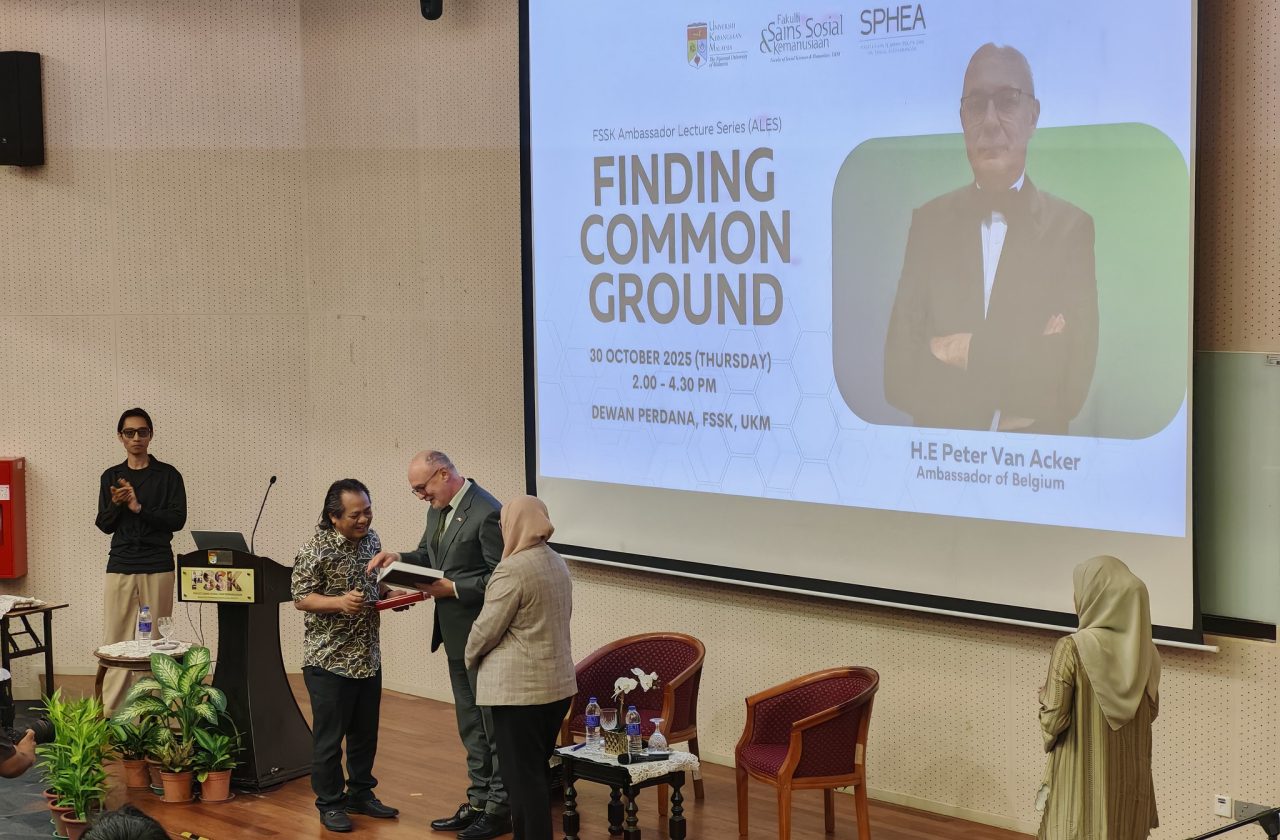
There was a talk at my campus, Universiti Kebangsaan Malaysia, by H.E. Mr. Peter Van Acker, the Ambassador of Belgium to Malaysia.
It felt like a good opportunity, not just because of who he is, but because of what he represents. A European perspective, speaking directly to a Malaysian and ASEAN audience, in an academic space. For someone interested in politics, governance, and regional dynamics, moments like this matter.

The session was held in a lecture hall filled with a mix of people. There were lecturers, some familiar faces from my faculty, and many undergraduate students. The presence of students stood out to me. Young, attentive, curious. It reminded me that these conversations are not only for policymakers or scholars, but also for those who are just beginning to understand how the world works beyond national borders.
The talk touched on geopolitics, diplomacy and how Europe views Malaysia and ASEAN. What interested me most was not specific policy positions, but the framing. How regions see each other. How language, tone, and emphasis shape international relationships. Listening to a European representative speak about ASEAN gives you a sense of how narratives are formed externally, and how strategic optics matter just as much as formal agreements.
There was a certain clarity in the way he spoke. Diplomatic, measured, but open. It was not about lecturing or asserting superiority. It was about finding common ground, acknowledging differences, and recognising the importance of dialogue in a world that is increasingly fragmented.
At the end of the session, there was a small but memorable gesture. He handed out chocolates. Belgian chocolate, something Belgium is famously known for. It was simple, almost light-hearted, but meaningful in its own way. A reminder that diplomacy is not always about grand statements. Sometimes it is about human connection, shared moments, and cultural symbols that make interactions warmer and more approachable.
Seeing my lecturers there added another layer to the experience. It felt grounding to be in the same room as people who teach, research and think about these issues professionally, all listening together. It blurred the line between student and academic, between learning in class and learning through exposure.
I left the hall feeling quietly enriched. Not overwhelmed, not energised in a dramatic way, but thoughtful. These are the kinds of encounters that slowly shape how you see the world. They do not demand immediate conclusions. They invite reflection.
For me, it was a reminder of why academic spaces matter. They create room for perspectives to meet. For regions to speak to each other. For students to listen not just to textbooks, but to voices shaped by real diplomatic experience.
Sometimes, just listening is already a form of learning.


