Standing With Sumud
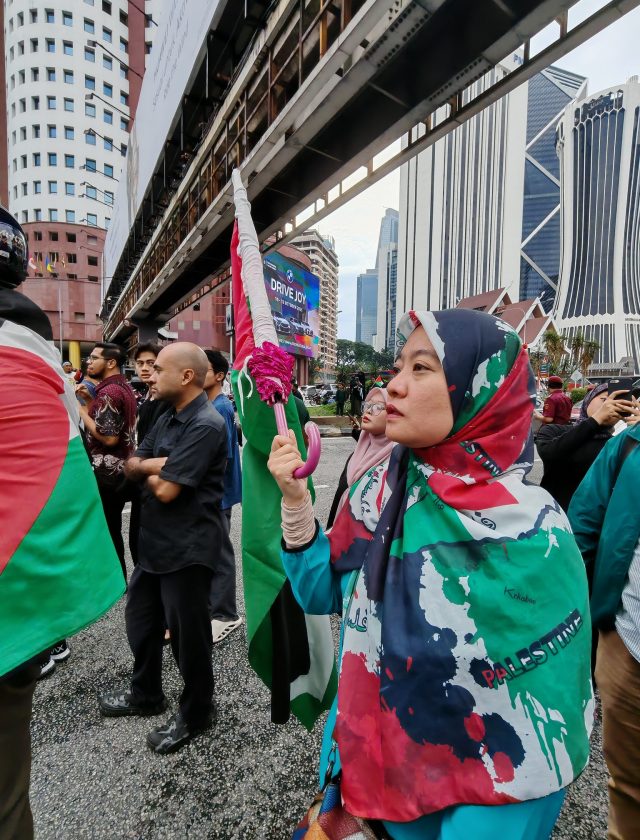
I went to the Himpunan Sumud Flotilla not as an observer from a distance, but as someone who felt the need to be physically present.
The word sumud carries weight. It is not a slogan. It means steadfastness, the quiet determination to remain, to endure, and to refuse erasure despite pressure, violence, and injustice. The Sumud Flotilla represents this idea in motion. A civilian-led effort, rooted in moral conviction rather than military power, seeking to challenge the siege on Gaza through presence, solidarity, and international conscience.
The flotilla is part of a long tradition of civil resistance, where ordinary people place their bodies, resources, and reputations on the line to say that collective punishment and prolonged suffering should never be normalised. It is linked to the broader work of the Freedom Flotilla Coalition, a network that has, for years, organised humanitarian missions to confront the blockade through non-violent means. Whether the boats reach their destination or not has never been the only point. The act itself is the message.
At the gathering, the atmosphere was heavy, but resolute. There was sadness, yes, but it was not paralysing. It was the kind of sadness that sharpens moral clarity. People were not there to perform outrage. They were there to express solidarity with a people who have been living under siege for years, largely unseen except when violence peaks and headlines briefly return.

What struck me was how composed the crowd was. No chaos. No provocation. Just a shared understanding that some injustices require presence, not just opinion. Many around me spoke quietly. Some stood silently. Others listened intently to speakers explaining the purpose of the flotilla, the risks involved, and why international attention still matters even when outcomes feel uncertain.
The idea of Sumud resonates precisely because it is not about immediate victory. It is about persistence. About refusing to allow suffering to fade into background noise. The flotilla carries humanitarian aid, but it also carries memory, conscience, and insistence. It reminds the world that blockades are not abstract policies, but lived realities that shape daily survival.
Being there made the issue feel grounded again. Not filtered through timelines or algorithmic outrage, but through faces, voices, and shared stillness. It reminded me that solidarity does not always roar. Sometimes it stands quietly, refusing to leave.
I did not attend to make demands, nor to simplify a deeply complex conflict. I attended because acknowledging humanity should never be controversial. Because showing up, peacefully and consciously, is one of the few tools ordinary people still have.
I left the gathering without celebration, and without despair. What remained was a steady sense of responsibility. Sumud is not dramatic. It is patient. It does not promise quick change, but it insists on moral continuity.
And in a world where attention moves too fast and suffering is easily normalised, that insistence matters.


