The Land in Baling

It has been almost three years since my father passed away.
Three years since we stood by his grave, whispered our final prayers, and tried to find a way to live in a world without his voice, his presence, his quiet strength.
Time doesn’t stop for grief, no matter how much you wish it would.
The days moved forward. Papers were signed, Faraid was settled, and the belongings that once made up the life of a man were slowly divided among those he left behind.
Among those was a piece of land in Baling. A forgotten corner of Kedah where the hills roll endlessly, where time itself seems to slow. I don’t remember it but I heard about that land whispered between the adults during conversations we never quite understood, a distant place with stories attached to it. We knew it existed, but like many things our parents kept quietly, it was never really discussed.
Then, a few nights ago, a message lit up my phone. It was from my brother.
“Someone’s trespassing on the land,” he said. “We need to check if our boundaries are still intact.”
Just like that, the past returned.
That small patch of earth, long untouched, long ignored was now calling us back.
We called in a land surveyor. Made the arrangements. And then, off we went.
Returning to the Land
Baling greeted us with heavy air and quiet roads, lined with dense trees and memories we hadn’t lived. When we reached the land, I was stunned.
It was beautiful.
Wild. Untamed. Raw.
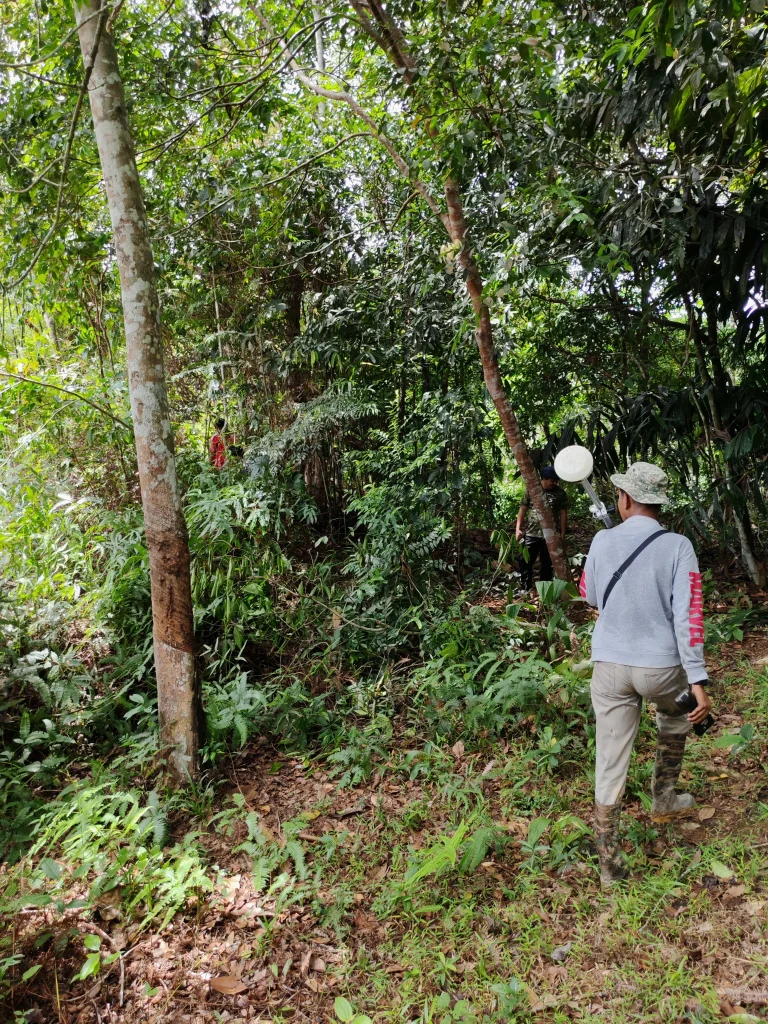

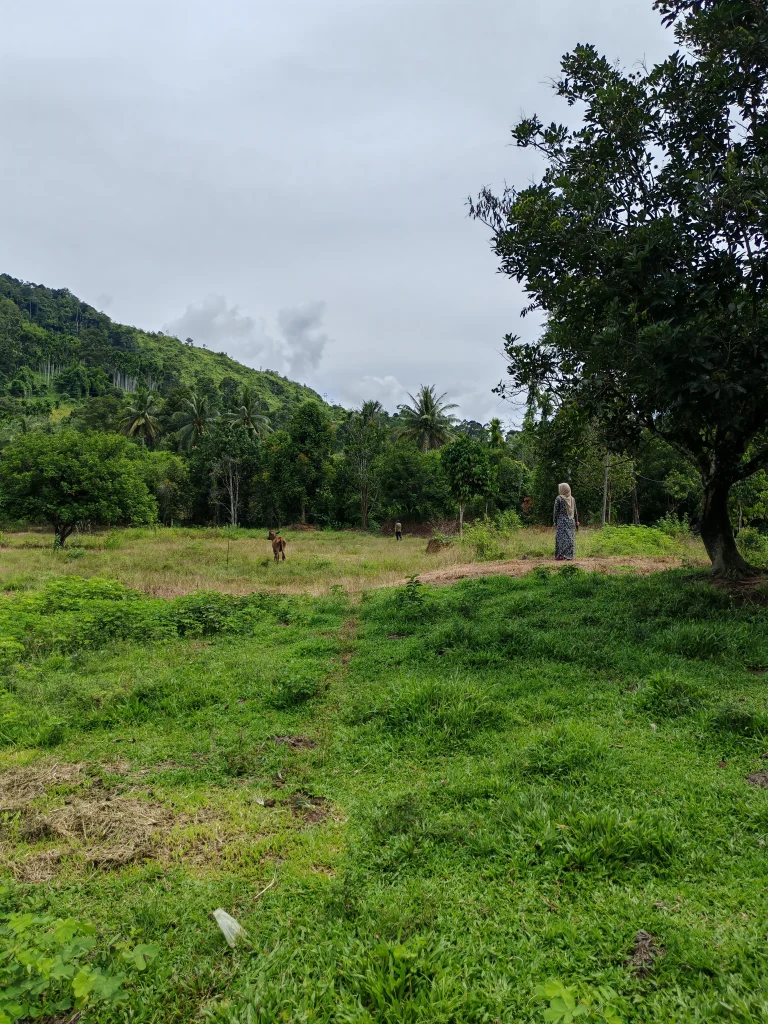
What was once just a line in a Faraid document was now alive before us, a thick hutan with towering trees, scattered oil palms, and even pokok getak, their tall trunks reaching up like guardians of the past. A small stream whispered its way through the underbrush, cutting through the silence like a forgotten song. The air was thick with the scent of earth and leaves, and the sun filtered through the canopy in golden shafts.
This wasn’t just “a piece of land.”
It was a breathing memory.
It felt like my father was here, somewhere between the trees, watching. Maybe this place was important to him in ways he never had time to explain.
The Complication
But the land… it wasn’t just beautiful.
It was problematic.
Boundaries were blurred. There had been encroachment. Some parts were difficult to access. And then… the house. A small structure stood quietly within the boundaries – with a family living in it. We don’t yet know who they are, or what history brought them there. We don’t know whether they believe they have a right to stay.
We haven’t decided what to do about them.
We could ask them to leave. We could ignore it. We could formalize something. But the questions weigh heavier than the answers. What would my father have done? Did he know about them? Was this kindness on his part? Or neglect?
What Now?
We completed the measurements with the surveyor. Verified our claim.
Yes, the land is legally ours.
But in truth, that raises more questions than it answers.
What does ownership mean when you’ve never stepped foot on something your family has held for decades? What do you do with a forest and a stream and a stranger’s house? And how do you honour the legacy of a father who quietly left behind more than just assets but pieces of himself, scattered like seeds?
For now, we don’t know.
We stood there for a while after the surveyor left. The trees swayed gently, and the stream sang its quiet tune. The land was calm, unaware of our confusion.
I stood still and listened.


